

Intune – Remove Default Microsoft Store Apps

One slight annoyance with IT Technicians would be preinstalled applications on new computers – we quite often have to remove ‘free’ subscriptions to an Anti-Virus that we don’t want or remove different cloud storage programs like Dropbox.

However, the preinstalled apps from the Microsoft Store is a different annoyance. Quite often you remove these manually or via a script for them to reappear on the next restart or by a feature update. In a business environment, we don’t want to have the Xbox App.

Through Microsoft Intune – we can now create a Configuration Profile to remove these preinstalled apps.

In this post I will show you to create this configuration profile.

Please note this only works for Windows 11 Enterprise and Education 25H2.

Read More »
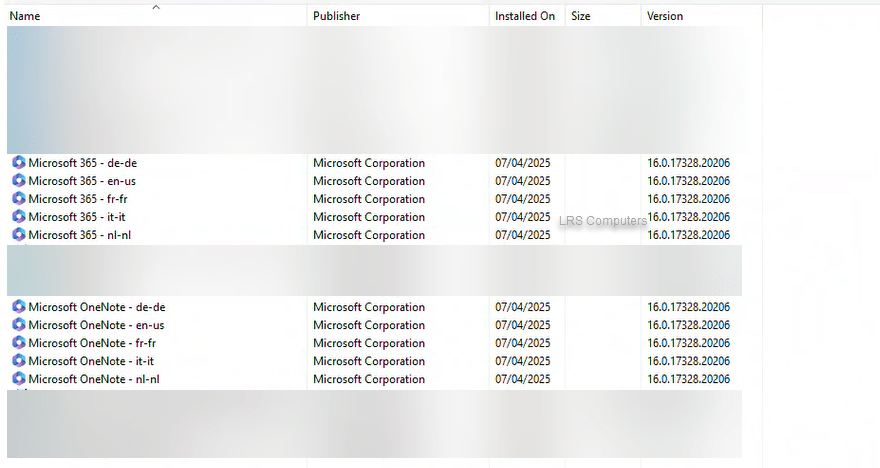
Uninstall Microsoft 365 (Office Applications)

When purchasing a new Windows computer from a manufacturer, mainly Dell – we have noticed that they like to install different language versions of Microsoft 365, and Microsoft OneNote.

The above can be totally fine, but as premade computers from a manufacturer – they are often packed with bloatware and unnecessary applications.

As I mainly deal with computers for businesses and clients who have their Microsoft 365 subscription, we much prefer to uninstall the above and install a fresh copy of Microsoft 365 (Office) directly from their account / subscription.

We can uninstall directly from Control Panel, but each one can take 2-3 minutes.

In this post, I will show you how I uninstall all the above with a few clicks.

Read More »

Anti-Virus Expired?

There’s been an argument online about whether paid anti-virus software is still required in the modern age of computing.

Growing up with computers in the late 1990s and early 2000s, there was a need for anti-virus software; we also needed anti-spyware tools to feel protected when accessing the internet. However, there is an argument now that states just using Defender (Microsoft’s own AV solution) is enough.

If you choose whether to use a paid anti-virus or not is totally down to you.

But we still need to look out for scams – we still see a bombardment of notifications claiming that your anti-virus solution has expired. Such as;

Is the above a genuine prompt from Norton? In this post, I will explain on why it isn’t.

Read More »

Intune – Silently Sign into OneDrive and Sync

One of the luxuries of using Azure AD and Intune, is that staff can pick up a laptop or sit at a desk and start using an enrolled device.

Once they sign in using their Microsoft 365 account, policies, applications automatically get pushed out – open Outlook, it signs you in, emails start populating, and they can continue like normal. However, we do find staff not utilising OneDrive.

With your Microsoft 365 account (depending on the license), you are granted 1TB of storage, which we find more than enough for the average office user. When you sign into OneDrive on a device, you can ‘backup’ the following locations Desktop, Documents and Pictures.

I use the term backup loosely, as OneDrive is not a backup solution.

Once those locations are ‘backed up’, the data will follow you from device to device – providing the end user signs into OneDrive on a new device. However, why create a step for yourself or the end user when we can automate it with Intune.

In this post, I will share an Intune Configuration to help you achieve the above.

Read More »